Owning a home is one of the most rewarding milestones in life, providing your family with a private sanctuary, a canvas for personal expression, and a powerful engine for long-term wealth accumulation. However, a house is not a static object; it is a complex, dynamic matrix of interconnected structural boundaries, high-voltage electrical pathways, pressurized plumbing lines, and mechanical ventilation systems. From the moment construction finishes, a property faces constant environmental stress, material fatigue, and continuous wear and tear.
For many homeowners, managing a property eventually brings a stressful realization: the to-do list of household repairs is never truly finished. Between fixing a drafty window, updating a dated kitchen countertop, and addressing a mysterious clicking sound in the furnace, it is remarkably easy to feel completely overwhelmed by the competing demands on your time and financial capital. Attempting to manage home repairs without a calculated strategy often results in decision paralysis, or worse, a misallocation of funds where cosmetic upgrades are prioritized while catastrophic infrastructure failures are left to worsen silently behind the drywall. Successful home stewardship requires a strict, logical system of triage, ensuring that your hard-earned capital is directed where it will protect your family most effectively. This comprehensive guide serves as your essential master manual for learning exactly how to prioritize house repairs, keeping your estate safe, efficient, and resilient for a lifetime.
Addressing Safety Issues Before Cosmetic Concerns
When establishing a hierarchy for home repairs, the absolute, non-negotiable tier at the apex of your pyramid must be occupied by life-safety hazards. Any mechanical malfunction, electrical fault, or structural failure that presents an immediate threat of physical injury, fire breakout, or compromised property security must be pushed to the absolute front of the line, completely bypassing all aesthetic renovations. Ignoring a life-safety issue to fund a cosmetic refresh is an incredibly reckless gamble that places your household in immediate vulnerability.
A prime example of a hidden safety hazard that demands immediate professional attention is a malfunctioning overhead entryway system. The garage door is consistently the largest, heaviest moving component of your home’s exterior shell, operating under immense mechanical tension generated by high-density steel torsion springs and lifting cables. If your door jerks violently during operation, makes loud grinding noises, or fails its automated safety reverse tests, it transforms from a daily convenience into a severe liability that can cause severe personal injury. Contacting an established team for an emergency garage door repair is a critical safety protocol, ensuring your home’s perimeter remains completely impenetrable to intruders while guaranteeing quiet, safe, and reliable automated operation for your family.
Fixing Structural Problems Before They Spread
Once your immediate life-safety boxes are fully checked and verified, your second operational tier must focus fiercely on the structural integrity of your home’s exterior envelope. Your roof, siding, and foundation serve as the primary protective shield that prevents the external environment from migrating into your living spaces. Of these boundaries, the roof shoulders the absolute heaviest physical burden, enduring intense UV radiation, high-velocity wind patterns, torrential downpours, and heavy winter ice loads continuously throughout the changing seasons.
Water is a home’s most insidious and destructive natural enemy. When a roof’s primary shingles crack, curl, or blow away during a storm, a microscopic entry point is instantly created for moisture to penetrate the underlying wooden roof deck. If you delay addressing these localized surface failures, water will follow gravity down along internal rafters, quietly rotting structural timber studs, destroying insulation properties, and fostering toxic black mold colonies long before a single drip breaches your living room ceiling. Investing in a proactive roof repairs program is the single most effective way to protect your interior remodeling investments, arresting the compounding cycle of moisture decay and saving you from the astronomical expenses of an early, unmanaged total roof replacement.
Responding Quickly to Major Plumbing Emergencies

The modern residential utility grid relies heavily on a complex network of pressurized supply lines bringing clean water into your home and gravity-fed waste lines carrying wastewater out. Because these pipes exist under continuous physical pressure and constant chemical exposure, material breakdown is an inevitable reality over decades of service. While a slow faucet drip can typically be managed over a weekend, a major plumbing breach represents a catastrophic structural emergency that requires instantaneous intervention.
When a pressurized copper supply line bursts inside a wall cavity, or a main sewage line backs up into your basement floor drains, the clock starts ticking against your property’s survival immediately. Within twenty-four to forty-eight hours of constant water exposure, porous building materials like drywall, baseboards, carpet padding, and engineered hardwood flooring will warp, delaminate, and provide a fertile breeding ground for toxic mold spores. Your very first step must be to locate and shut off your home’s main water valve to halt the internal flood, followed immediately by a call to a dedicated emergency plumber. Emergency plumbing specialists operate around the clock to locate and repair subterranean breaches rapidly, stopping the inward migration of water and limiting the spread of structural damage.
Inspecting Ventilation and Exterior Systems Regularly
A resilient home maintenance framework balances immediate emergency responses with a disciplined schedule of regular visual audits. Many exterior architectural systems operate completely out of sight and out of mind, quietly accumulating hidden environmental liabilities that can suddenly trigger catastrophic property losses if they are left unmonitored. This is particularly true for high-heat ventilation channels like masonry chimneys and wood-burning stove flues.
Over years of burning fuel, the interior walls of a fireplace flue accumulate a highly volatile, sticky byproduct known as creosote, which presents a significant chimney fire risk if allowed to build up. Furthermore, seasonal freeze-thaw cycles can allow water to enter microscopic cracks in exterior brickwork, expanding as it freezes and slowly fracturing the structural masonry bond. To shield your family from these silent combustion and structural threats, incorporating a comprehensive local chimney repair and inspection visit into your annual autumn maintenance checklist is an absolute necessity. Certified technicians can clear away highly flammable creosote blockages and perform tuckpointing to rebuild crumbling exterior mortar joints, keeping your high-heat ventilation tracks meticulously clean and structurally sound.
Restoring Heating and Cooling Systems During Failures
Your heating, ventilation, and air conditioning (HVAC) system is likely the single most expensive mechanical asset in your home and the primary driver of your monthly energy consumption. A custom furnace or modern heat pump does far more than simply provide a comfortable indoor temperature; it serves as a critical life-support mechanism during periods of extreme environmental exposure. When a heating system completely collapses during a record-breaking sub-zero winter freeze, you are facing an immediate property crisis.
Within a few hours of a total furnace shutdown during a severe freeze, the internal ambient temperature of a home can drop rapidly toward the freezing mark, placing your uninsulated water pipes at immediate risk of freezing, expanding, and violently bursting inside your walls. Furthermore, extended exposure to extreme cold or oppressive summer heat can jeopardize the health of vulnerable family members. When your primary climate mechanics suffer a sudden mechanical blackout, reaching out to certified emergency hvac services must be treated as an absolute priority. Emergency technicians can safely replace cracked heat exchangers, swap out burned-out blower motors, and reset safety limit switches rapidly, restoring a safe, stable, and warm environment.
Maintaining Essential Water Systems for Daily Use
For properties situated outside the reach of centralized municipal utility grids, daily household survival is entirely dependent on a private, self-contained water delivery infrastructure. A residential water well system relies on a complex balance of submersible pumps, pressurized storage tanks, filtration matrices, and electronic pressure switches hidden deep beneath your lawn to deliver clean, potable water to your taps. Because this system operates underground, it is remarkably easy to ignore until the moment the faucets run completely dry.
A total failure of your private well infrastructure brings the entire daily routine of your household to an absolute standstill, stripping your family of the ability to flush toilets, shower, run washing machines, or access safe drinking water. Sluggish water delivery, a pump that constantly cycles on and off rapidly, or a sudden change in water clarity and taste are severe physical warnings that your subterranean machinery is undergoing critical mechanical distress. To prevent your household from being completely stranded without running water, scheduling an immediate diagnostic with a specialist in well repair is a vital operational step, ensuring your private utility network delivers a powerful, consistent stream of clean water.
Preventing Water Damage Before It Becomes Severe
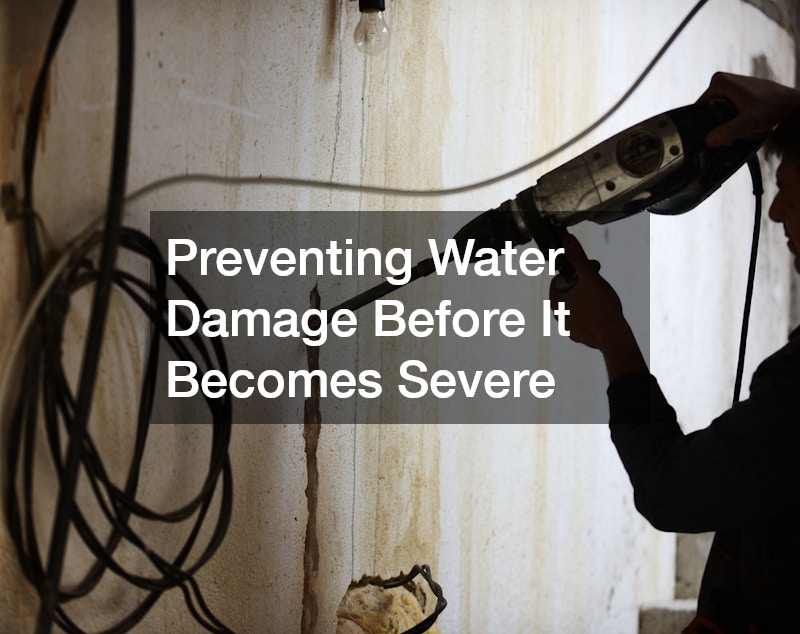
In the realm of responsible property management, there is an important financial distinction between managing a sudden, insurance-covered emergency burst and managing a slow, chronic hidden leak. A slow water leak from a corroded pipe joint inside a crawlspace or a failed seal behind a master shower pan is often far more destructive over time than an immediate flood. Because these leaks can remain completely hidden from view for months, they slowly saturate structural timber framing, destroy insulation performance, and rot subflooring entirely before any visible indicators manifest.
By the time a homeowner notices a mysterious musty odor, a section of bubbling paint, or a yellowish-brown stain spreading across a ceiling, the structural wood sheathing has likely already suffered severe wood-decay rot. To arrest this hidden environmental decay, responding aggressively to early structural warning signs by authorizing emergency water repairs is an absolute necessity. Specialized mitigation teams utilize thermal imaging cameras, moisture meters, and acoustic sensors to map out the exact path of moisture migration through your walls without tearing down drywall blindly. Taking decisive, rapid action stops structural rot in its tracks and safeguards your family’s respiratory health from toxic mold spores.
Repairing Household Equipment That Supports Daily Routines
Once your home’s primary structural shell, safety systems, and core pressurized utility lines are fully optimized and secure, your prioritization strategy can comfortably transition to the secondary tier: functional mechanical appliances. Your kitchen and laundry appliances serve as the critical mechanical workhorses of your daily routine. A malfunctioning refrigerator, a failing oven, or a broken washing machine can quickly disrupt your family’s schedule, leading to expensive food waste, chaotic dining routines, and massive laundry backlogs.
While it is tempting to view a broken appliance as an excuse to immediately purchase an expensive replacement, this approach is often an inefficient waste of your budget. In many instances, an appliance stops functioning because of a single electronic or mechanical component, such as a failed heating element, a broken door switch, or a degraded control board relay. Before committing thousands of dollars to a new retail model, scheduling a diagnostic visit with a certified appliance service provider is the smartest budget strategy, restoring factory-grade functionality to your appliance at a fraction of the cost of a total replacement.
Resolving Cooling Issues Before Seasonal Demand Increases
A common behavioral trap for many first-time homeowners is procrastination—waiting until the absolute peak of a seasonal weather cycle before addressing a known mechanical weakness. We notice that our central air conditioning system struggles to lower the temperature during the final warm weeks of autumn, but because winter is arriving, we push the issue off our radar. This delay ensures that you will face a major system breakdown during the first intense heatwave of the subsequent summer.
Attempting to schedule an emergency air conditioning repair in the middle of a record-breaking July heatwave is an incredibly frustrating and expensive exercise due to overwhelming seasonal backlogs. Furthermore, running a degraded cooling system continuously during extreme heat forces the compressor motor to labor under intense thermal stress, accelerating internal component wear. To outmaneuver this seasonal rush, the smartest strategy is to partner with a trusted air conditioning repair company during the mild spring months. Scheduling a preventative seasonal tune-up allows a technician to replace failing components before they leave you stranded, ensuring your home remains a cool, comfortable sanctuary the exact day the summer heat hits.
Protecting the Home From Drainage Problems
The final line of defense in a comprehensive property preservation plan involves mastering the art of exterior water management. As established, water is a home’s absolute greatest structural enemy. When torrential rain falls onto your roof deck, a standard residential roof can collect thousands of gallons of water over a single hour. If your home lacks a robust, highly efficient drainage system to capture and channel this volume away from your property line, that water will systematically destroy your entire estate.
When gutters become warped, disconnected, or choked with leaves and debris, rainwater will overflow, cascading directly down along your home’s exterior siding. This continuous water exposure rots wooden window casings, stains premium masonry finishes, and eventually pools directly at the base of your foundation wall, creating hydrostatic pressure that cracks concrete blocks and floods basements. Investing in professional, seamless gutter repairs is an incredibly high-return strategy for safeguarding your home’s underlying value. A specialized gutter contractor can realign the pitch of your troughs so that water moves continuously toward downspouts without pooling, permanently protecting the structural integrity of your foundation.
Learning how to prioritize house repairs is the absolute hallmark of responsible, mature home stewardship. A home is likely your most significant financial asset and the physical container where your family’s daily memories unfold; treating its complex interconnected systems with strategic, objective respect pays massive dividends in long-term safety, financial equity, and daily comfort.
By breaking down your property maintenance into a strict, logical hierarchy—placing life-safety interventions like a certified garage door repair at the absolute apex, followed closely by structural roof repairs, immediate emergency plumber flood mitigation, and long-term foundation drainage control—you insulate your wallet from unexpected financial ruin. You systematically eliminate the emotional anxiety of unexpected mechanical blackouts, protect your home’s expensive interior finishes from moisture rot, and ensure that your utility networks perform with peak efficiency. Take control of your property’s structural roadmap today, choose professional technical precision over temporary shortcuts, and enjoy the lasting comfort and security of a home built to stand the test of time.